

Crafted with responsibility
Every sofa we make is a considered act - from the forest floor to your living room. Here is what that means in practice.
"Sustainability is not a feature we add to our sofas.
It is the foundation on which every decision is made."
SECTION 01 - FRAMES
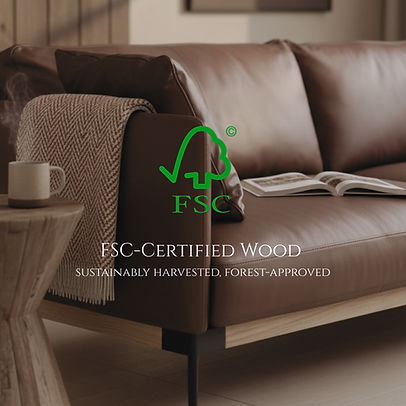
FSC-Certified Wooden Frames
Forest Stewardship Council
What is FSC certification and why does it matter?
The Forest Stewardship Council (FSC) is an independent, non-profit organisation that sets the global standard for responsible forest management. When timber carries the FSC mark, it has been verified along every step of the supply chain, from forest to mill to finished product. Choosing FSC-certified wood means the forests supplying our frames are managed in a way that protects biodiversity, upholds the rights of local communities, and ensures timber is harvested at a rate that allows the forest to regenerate naturally.
Does all the wood in my sofa frame carry this certification?
Yes. Every wooden sofa frame we produce, including internal cross-members, legs, and support rails, uses FSC-certified timber exclusively. We do not mix certified and uncertified wood within a single piece.
How does this affect the durability of the sofa?
FSC-certified timber is sourced from well-managed forests where trees are allowed to mature properly. This typically results in denser, more stable wood grain compared to timber harvested prematurely from unmanaged sources. A well-built hardwood frame is the single biggest determinant of a sofa's lifespan, ours are built to last decades, not years.
SECTION 02 — LEATHER
Responsible Leather Sourcing
Kind Leather · Leather Working Group
Which leather certifications do you use?
We source leather exclusively from tanneries accredited under two recognised frameworks:
Kind Leather — a standard focused on animal welfare and ethical rearing practices throughout the leather supply chain, ensuring hides come from animals raised under humane conditions.
Leather Working Group (LWG) — an internationally respected audit programme that evaluates tanneries on environmental performance, including water and energy usage, chemical management, and waste reduction. LWG-rated tanneries represent the most transparent and accountable segment of the global leather industry. We target Gold-rated partners wherever possible.
What does the lifecycle of your leather look like?
Our leather follows a transparent journey from by-product to heirloom-quality upholstery:
-
By-product hide
-
Ethical tannery processing
-
Quality grading & selection
-
Precision cutting
-
Handcrafted sofa
-
Decades of use
Our leather is a by-product of the food industry — it would otherwise go to waste. By transforming it into long-lasting furniture, we extend its useful life significantly, reducing overall material waste.
Are tannery chemicals and wastewater managed responsibly?
Yes. LWG-accredited tanneries are audited on their chemical usage, wastewater treatment, and effluent discharge. Only tanneries that score at Bronze, Silver, or Gold rating — representing progressively higher environmental performance — qualify to supply us. We target Gold-rated partners wherever possible.

SECTION 03 — CONSTRUCTION
Efficiency in Construction
Reducing Waste at Every Step
How do you minimize material wastage during production?
Waste reduction is built into our production process at two critical stages:
Wood cutting SOP — Our craftspeople follow a standardised cut-plan for each frame design, optimised to extract the maximum yield from every board. Off-cuts above a minimum size threshold are retained and repurposed for smaller components rather than discarded.
Leather cutting SOP — We use a nesting-based cutting approach, mapping each panel pattern digitally against the hide's usable area before a single cut is made. This significantly reduces offcut waste compared to freehand methods.
What happens to offcuts and production remnants?
Wood offcuts are first assessed for reuse in smaller frame components or as packing material for deliveries. Leather offcuts that are too small for furniture panels are collected and donated to leathercraft schools and artisan programmes, keeping the material in productive use rather than in landfill.
Are your production standards documented and audited?
Yes. Our cutting and assembly workflows are governed by documented Standard Operating Procedures (SOPs) that are reviewed regularly. Every team member on the production floor is trained to these standards, ensuring consistent quality and consistent waste outcomes — not just best-case performance.
SECTION 04 — PRODUCTION MODEL
Made to Order
No Overproduction. No Excess Inventory.
Why are your sofas made to order?
The furniture industry generates enormous waste through overproduction, sofas that sit in warehouses, go unsold, and eventually get discarded. We have deliberately chosen a made-to-order model so that every piece of leather cut and every length of timber shaped has a confirmed home waiting for it. No speculative stock. No end-of-season clearances. No material that exists without purpose.
Does this mean a longer wait time?
Yes, your sofa will typically take 6 to 10 weeks from order confirmation to delivery. We consider this a worthwhile trade-off: you receive a piece built specifically for you, using exactly the materials your sofa requires and nothing more. The wait is part of the craftsmanship.
How does made-to-order connect to the wider sustainability picture?
Made-to-order is the final layer that ties our sustainability commitments together. It ensures that the careful sourcing of FSC timber, the responsible tanning of leather, and the precision of our cutting processes are never wasted on a sofa that was never needed. Production on demand is the most honest form of responsible manufacturing.
A sofa built to last a lifetime is a sustainable sofa.
Longevity is the most powerful sustainability metric there is. Every choice we make, in materials, in process, in production model, is guided by this belief.




Fast Furniture vs Long-Life Furniture
In recent years, the furniture industry has begun to experience a phenomenon similar to “fast fashion.” Just as fast fashion produces inexpensive clothing designed to be worn briefly and replaced quickly, fast furniture refers to mass-produced pieces made with lower-cost materials and shorter expected lifespans.
Fast furniture is often attractive because of its lower upfront price and trendy designs. However, these pieces are typically constructed using materials such as particle board, thin veneers, synthetic upholstery, or PU leather. While these materials can look appealing when new, they tend to wear out, sag, peel, or break down within a few years of regular use. As a result, many households find themselves replacing furniture far more frequently than they anticipated.
This cycle of frequent replacement has a significant environmental impact. Each discarded sofa or chair contributes to landfill waste, while the production of new furniture requires additional raw materials, energy, and transportation. Over time, repeatedly replacing lower-quality furniture can create a larger environmental footprint than investing in well-made pieces designed to last.
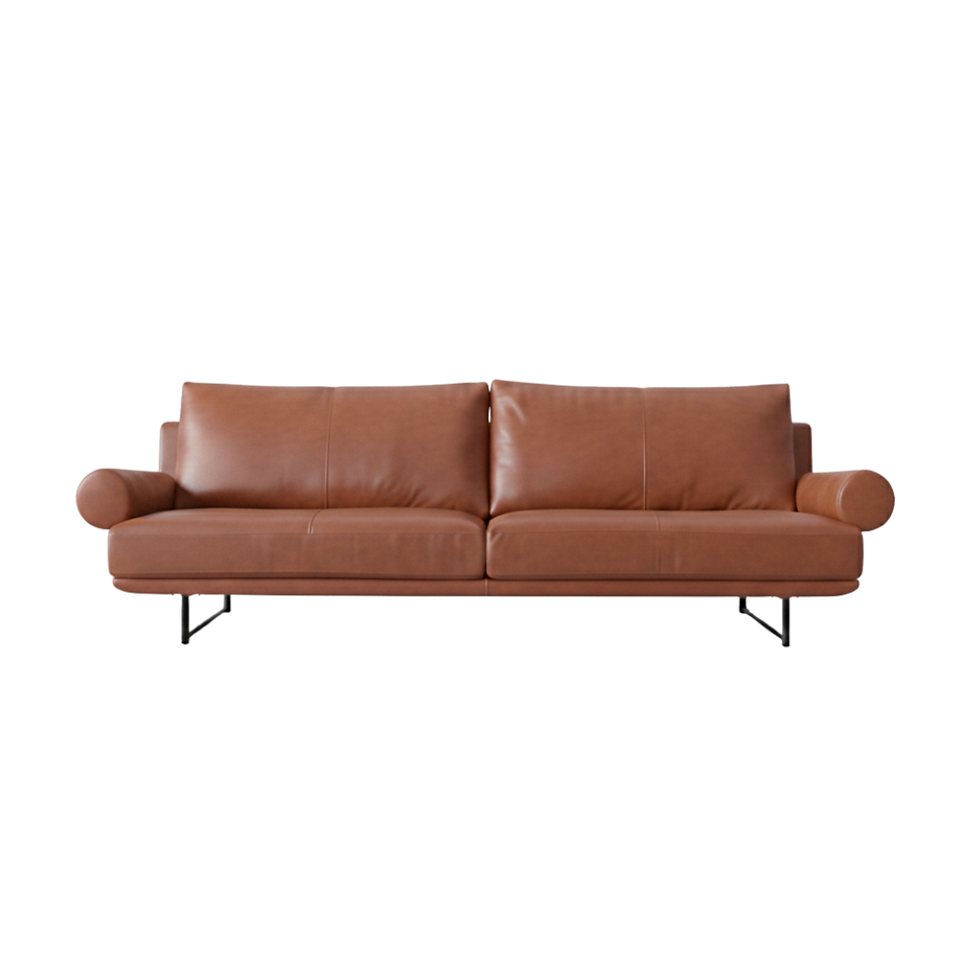
Long-life furniture takes a different approach. Instead of prioritizing short-term affordability or trend cycles, it focuses on durable materials, solid construction, and timeless design. Materials such as solid wood frames, high-density cushioning, and high-quality natural leather can withstand years, often decades of daily use. Well-built furniture can also be maintained, repaired, or refreshed over time rather than discarded.
From a sustainability perspective, durability plays an important role. A sofa that lasts 15–20 years reduces the need for multiple replacements, lowering the amount of furniture entering landfills and decreasing the resources required for manufacturing new pieces. Choosing furniture built to last is therefore one of the most practical ways homeowners can reduce waste while creating a home environment that remains comfortable and beautiful over time.